
"cultural history"
2000 article(s) found

The history and culture of Chinese coffee When did coffee come into China?
In Europe, coffee culture can be said to have been very weak, then, coffee into China when it? How long has it been in China? The earliest coffee cultivation in mainland China began in Yunnan Province in the early 20th century when a French missionary brought the first coffee seedlings to Binchuan County in Yunnan Province. Now in China's Guangdong, Guangxi, Yunnan, Taiwan and Fujian Xiamen and other places have a

Papua New Guinea Coffee Culture Papua New Guinea Coffee History
Babu coffee flavor and taste characteristics: full particles, moderate acidity, mellow taste. Papua New Guinea is an island country in Oceania. Papua means curly hair in Malay. It is said that in 1545, the explorer Retes arrived on the island and found that most of the people on the island had curly hair, that is, the island was called the island of curly hair.

The basic knowledge of Fine Coffee Culture and the History of Coffee
African shepherds discovered strange coffee fruits on the plateau in about 500 AD. Since then, humans have known coffee. Coffee was planted in Arabian Peninsula and used as medicinal and religious feed. Coffee was introduced into Europe from Venice, Italy, in 1554. The colorful European coffee culture began to be born in 1616. Coffee was spread to the Netherlands from the port of Mocha.

History and culture of Cuban coffee
Coffee was introduced to Cuba from Dominica in 1748, and Cuba has since grown coffee. The fertile soil, humid climate and abundant rainfall in Cuba make it a natural treasure for coffee cultivation. Suitable natural conditions provide a favorable natural environment for the growth of coffee trees, where coffee is well planted and developed. In Cuba, coffee cultivation is regulated by the State. Cuba

Knowledge of coffee history and culture the history and production technology of siphon coffee
When you see baristas playing with siphon pots of coffee blooming in boutique coffee shops and dealers, the trend of siphon coffee is nothing new. In fact, the idea has been around since the mid-19th's, when people agreed that boiling coffee would obliterate the flavor, and began to try to solve the problem with vacuum and pressure. The earliest specialty of vacuum coffee technology
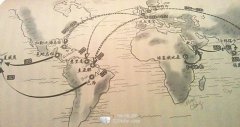
The spread History of Coffee Culture Fine Coffee in the World
Ethiopia (7th-9th century) Arab States (Yemen) Nataka, India (1600) Ceylon (1658 Netherlands) Java (16901696 Netherlands) Amsterdam (Netherlands 1706-1710) Versailles (France around 1713) and Suriname Caribbean island countries and Guyana and Brazil Guatemala Hawaii (United States 1892 and 1825) Arab States Yemeni French Bourbon 1

Three coffee waves in coffee culture history
The first coffee wave: In the 1930s and 1940s, the U.S. military brought coffee to all parts of the world as a necessity to prevent fatigue during combat, and the bitter taste of coffee served as a refreshing effect. Then came the invention and rise of instant coffee. Second coffee wave: After World War II, Italy's method of steam pressure extraction of espresso began to be familiar and accepted.

Development trend of fine coffee in the history of coffee culture
As long as it is delicious coffee, coffee consumers are willing to pay a high price; as long as delicious coffee is provided, consumers will not abandon coffee and the market will grow. High-quality coffee represented by boutique coffee is better than big business coffee producers and consumers have discovered this simple fact. In recent years, coffee producing countries no longer blindly pursue high output while neglecting quality.
The Origin of Cafe Culture History Cafe
A coffee shop is also called a coffee shop. The earliest cafe, called Kaveh Kanes, was built in Mecca. Although originally for a religious purpose, these places soon became centers for playing chess, chatting, singing, dancing and listening to music. Since Mecca, cafes have spread all over Asia.
Three waves of Coffee in the History of Fine Coffee Culture
The first coffee wave: in the 1930s and 1940s, the US military took coffee as a necessity around the world to prevent combat fatigue, and the bitterness of coffee was known by the public as a pick-me-up. Then the invention and rise of instant coffee. The second Coffee Wave: after World War II, the Italian method of steam pressure extraction of espresso began to be familiar and accepted.
The Development History of Fine Coffee Culture in China
From the success of coffee planting in Taiwan in 1884 to today, the development of coffee in China has gone through more than one hundred years of ups and downs. The following is a detailed introduction: ★ in 1884, coffee was successfully planted in Taiwan. In 1902, ★ successfully introduced and planted coffee in Yunnan, China. ★ in 1985, Yunnan Agricultural Reclamation began to grow coffee commercially. ★ 1992, UNDP assisted China to build

The history of Cappuccino, the culture of fancy coffee
The monks of the St. Franciscan Church (Capuchin), founded after 1525, wore brown robes and pointed hats. When the St. Franciscan Church spread to Italy, the locals thought the monks' clothes were special, so they gave them the name Cappuccino. The Italian word refers to the loose robes and pointed hats worn by monks, derived from the Italian headscarf, namely Cappuccio. However,

Do you know these ancient coffee utensils in the history and culture of coffee?
On October 1st, 1987, the only UCC Coffee Museum in Japan opened, located in the central district of Kobe, Japan. It was built by the world-famous Uamashima Coffee Co., Ltd. to commemorate its 60th anniversary. Its appearance refers to the modern design of the impression of Islamic temples, which regard coffee as a precious drink. U

Three waves of Coffee in the History of Fine Coffee Culture
The first coffee wave: in the 1930s and 1940s, the US military took coffee as a necessity around the world to prevent combat fatigue, and the bitterness of coffee was known by the public as a pick-me-up. Then the invention and rise of instant coffee. The second Coffee Wave: after World War II, the Italian method of steam pressure extraction of espresso began to be familiar and accepted.

An introduction to the Cultural and Historical reasons of American Coffee to understand the Cultural History of Coffee
Although Americans are world-famous for their coffee, the average amount of coffee they drink each year is less than half that of 1946, indicating that there is still a lot of room for expansion in the American coffee market. With coffee consumption on the rise again, the numbers suggest that despite appearance, the market is far from saturated, an

The History and Culture of Cuban Coffee
In 1748, coffee was introduced into Cuba from Dominica, and Cuba began to grow coffee ever since.

The process of spreading Coffee in the History of Coffee Culture
Since when has coffee become an acceptable drink? The real time is unknown. But it is said that the record began in the early eleventh century and can be seen in ancient Arab documents. Before that, raw coffee beans were dried and then fried in the Arab region as stomach medicine, but it was later learned that coffee still had a refreshing effect, coupled with strict Muslim precepts that forbade believers.

The basic knowledge of Coffee Culture the History of Coffee in China
According to historical records, coffee trees were first planted in Taiwan in 1884, and coffee cultivation in mainland China began in Yunnan. In 1902, a French missionary named Tian introduced seeds from Yinggong County in Binchuan County, Yunnan Province. it was successfully planted in a place called Zhu Kula, which is located on the bank of the Yushan River, a tributary of the Jinsha River. The commercial cultivation of coffee in Yunnan began in 1985, but its development is slow.

A brief introduction to the history and culture of the origin and development of fine washed coffee beans in Santa Rita, Colombia
The history of coffee cultivation in Colombia can be traced back to the Spanish colonial era in the 16th century, and there are many theories about the history of coffee in Colombia: one: it is said to come from the island of Haiti in the Caribbean and from El Salvador in Central America. Second: in 1808, a priest introduced coffee beans to Colombia for the first time from the French Antilles via Venezuela. One of them

The first coffee shop in the Imperial Palace in Shenyang has officially opened as a new "online celebrity sign-in place" I.
Recently, a coffee shop has been opened in Shenyang Imperial Palace. According to the Shenyang Museum, the cafe, called morphine, has officially opened to the public after a trial operation on February 13. Unlike common museums, the first coffee cafe in Shenyang Imperial Palace can enjoy coffee and experience the strong history and culture of Shenyang Imperial Palace at the same time without buying museum tickets. You can see it from the picture.